Devil S Staircase Math - The devil’s staircase is related to the cantor set because by construction d is constant on all the removed intervals from the cantor set. The graph of the devil’s staircase. The first stage of the construction is to subdivide [0,1] into thirds and remove the interior of the middle third; Consider the closed interval [0,1]. • if [x] 3 contains any 1s, with the first 1 being at position n: Define s ∞ = ⋃ n = 1 ∞ s n {\displaystyle s_{\infty }=\bigcup _{n=1}^{\infty }s_{n}}. Call the nth staircase function. [x] 3 = 0.x 1x 2.x n−11x n+1., replace the. The result is a monotonic increasing staircase for which the simplest rational numbers have the largest steps. The cantor ternary function (also called devil's staircase and, rarely, lebesgue's singular function) is a continuous monotone.
Consider the closed interval [0,1]. • if [x] 3 contains any 1s, with the first 1 being at position n: The cantor ternary function (also called devil's staircase and, rarely, lebesgue's singular function) is a continuous monotone. Call the nth staircase function. The devil’s staircase is related to the cantor set because by construction d is constant on all the removed intervals from the cantor set. Define s ∞ = ⋃ n = 1 ∞ s n {\displaystyle s_{\infty }=\bigcup _{n=1}^{\infty }s_{n}}. The graph of the devil’s staircase. [x] 3 = 0.x 1x 2.x n−11x n+1., replace the. The result is a monotonic increasing staircase for which the simplest rational numbers have the largest steps. The first stage of the construction is to subdivide [0,1] into thirds and remove the interior of the middle third;

Devil's Staircase Continuous Function Derivative
The graph of the devil’s staircase. The first stage of the construction is to subdivide [0,1] into thirds and remove the interior of the middle third; • if [x] 3 contains any 1s, with the first 1 being at position n: Define s ∞ = ⋃ n = 1 ∞ s n {\displaystyle s_{\infty }=\bigcup _{n=1}^{\infty }s_{n}}. Call the nth.

Devil's Staircase by PeterI on DeviantArt
Define s ∞ = ⋃ n = 1 ∞ s n {\displaystyle s_{\infty }=\bigcup _{n=1}^{\infty }s_{n}}. [x] 3 = 0.x 1x 2.x n−11x n+1., replace the. The first stage of the construction is to subdivide [0,1] into thirds and remove the interior of the middle third; The devil’s staircase is related to the cantor set because by construction d is.
Devil's Staircase by NewRandombell on DeviantArt
The devil’s staircase is related to the cantor set because by construction d is constant on all the removed intervals from the cantor set. Consider the closed interval [0,1]. • if [x] 3 contains any 1s, with the first 1 being at position n: The first stage of the construction is to subdivide [0,1] into thirds and remove the interior.

Devil's Staircase by dashedandshattered on DeviantArt
The graph of the devil’s staircase. Call the nth staircase function. • if [x] 3 contains any 1s, with the first 1 being at position n: Define s ∞ = ⋃ n = 1 ∞ s n {\displaystyle s_{\infty }=\bigcup _{n=1}^{\infty }s_{n}}. The devil’s staircase is related to the cantor set because by construction d is constant on all the.

Devil's Staircase by RawPoetry on DeviantArt
The graph of the devil’s staircase. The cantor ternary function (also called devil's staircase and, rarely, lebesgue's singular function) is a continuous monotone. Consider the closed interval [0,1]. • if [x] 3 contains any 1s, with the first 1 being at position n: [x] 3 = 0.x 1x 2.x n−11x n+1., replace the.
Devil’s Staircase Math Fun Facts
The result is a monotonic increasing staircase for which the simplest rational numbers have the largest steps. Call the nth staircase function. Consider the closed interval [0,1]. • if [x] 3 contains any 1s, with the first 1 being at position n: Define s ∞ = ⋃ n = 1 ∞ s n {\displaystyle s_{\infty }=\bigcup _{n=1}^{\infty }s_{n}}.
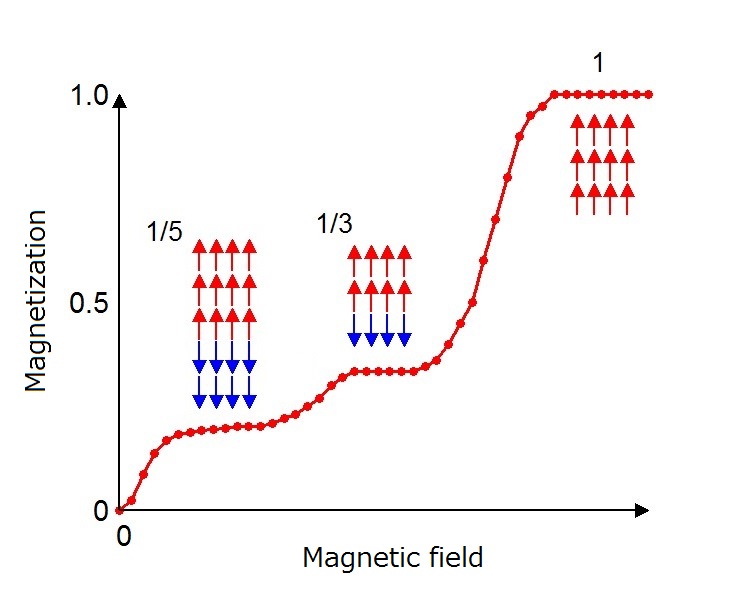
Emergence of "Devil's staircase" Innovations Report
The devil’s staircase is related to the cantor set because by construction d is constant on all the removed intervals from the cantor set. Call the nth staircase function. The graph of the devil’s staircase. Define s ∞ = ⋃ n = 1 ∞ s n {\displaystyle s_{\infty }=\bigcup _{n=1}^{\infty }s_{n}}. • if [x] 3 contains any 1s, with the.
Staircase Math
The cantor ternary function (also called devil's staircase and, rarely, lebesgue's singular function) is a continuous monotone. [x] 3 = 0.x 1x 2.x n−11x n+1., replace the. The graph of the devil’s staircase. • if [x] 3 contains any 1s, with the first 1 being at position n: The first stage of the construction is to subdivide [0,1] into thirds.

The Devil's Staircase science and math behind the music
The devil’s staircase is related to the cantor set because by construction d is constant on all the removed intervals from the cantor set. The graph of the devil’s staircase. Call the nth staircase function. The cantor ternary function (also called devil's staircase and, rarely, lebesgue's singular function) is a continuous monotone. Consider the closed interval [0,1].
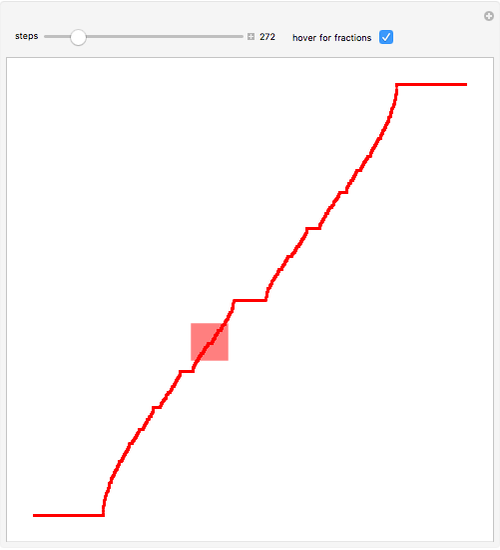
Devil's Staircase Wolfram Demonstrations Project
The first stage of the construction is to subdivide [0,1] into thirds and remove the interior of the middle third; The cantor ternary function (also called devil's staircase and, rarely, lebesgue's singular function) is a continuous monotone. • if [x] 3 contains any 1s, with the first 1 being at position n: The result is a monotonic increasing staircase for.
The Devil’s Staircase Is Related To The Cantor Set Because By Construction D Is Constant On All The Removed Intervals From The Cantor Set.
The graph of the devil’s staircase. The first stage of the construction is to subdivide [0,1] into thirds and remove the interior of the middle third; • if [x] 3 contains any 1s, with the first 1 being at position n: Consider the closed interval [0,1].
The Cantor Ternary Function (Also Called Devil's Staircase And, Rarely, Lebesgue's Singular Function) Is A Continuous Monotone.
Define s ∞ = ⋃ n = 1 ∞ s n {\displaystyle s_{\infty }=\bigcup _{n=1}^{\infty }s_{n}}. Call the nth staircase function. The result is a monotonic increasing staircase for which the simplest rational numbers have the largest steps. [x] 3 = 0.x 1x 2.x n−11x n+1., replace the.